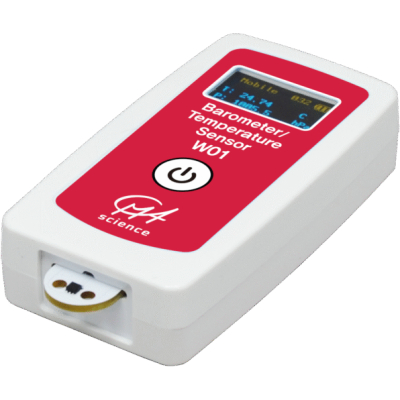
Description
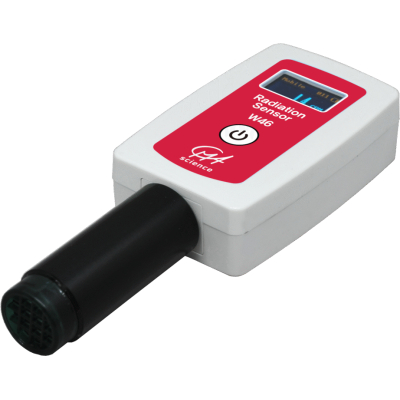
The sensor can be used wirelessly via Bluetooth or wired via USB with the Coach 7 or Coach 7 lite programs/apps on computers (Windows and Mac), Chromebooks and mobile devices (Android and iOS).
To detect radiation, point the sensor toward the source of radiation. To detect alpha radiation put the sensor close to the source, this is because alpha particles do not travel far through air.
The radiation sensor comes factory-calibrated in counts per minute (cpm).
Technical specifications:
- Measuring range: 0 .. 20 000 counts per minute (cpm)
- Resolution: 1 count per minute (cpm)
- Warrantee: 36 months
- Radiation Type: Alpha, Beta, and Gamma Radiation
- OLED display: 0.96” 128 x 64px
- Min. Dead Time: 90 μs
- Audio Output: Click sound for each count
- Maximal sampling rate: 1 Hz
- Battery life: 6h when fully charged (rechargeable)
- Connection: Bluetooth 5, Low Energy (Mac, Android, iOS) Bluetooth 2.1, Classic (Windows) or USB-C 2.0
All specifications of the sensor are described it its Product manual, see downloads.
Suggested physics and radiation experiments:
- Monitoring background radiation: measure natural background radiation from cosmic rays, earth minerals, and materials
- Monitoring radiation of common radioactive materials: use everyday radioactive materials like potassium salts or lantern mantles to demonstrate the random nature of radiation
- Radioactive Decay and half-Life determination: measure decay rates and half-lives using isotope generators such as Protactinium (72 s) or Ba-137m (153 s)
- Radiation level versus shielding: record radiation levels with different thicknesses and types of absorbers—aluminum for beta, lead for gamma—and compare their shielding effects on alpha, beta, and gamma radiation
- Radiation intensity vs. distance: measure how radiation levels change as the sensor is moved farther from the source